
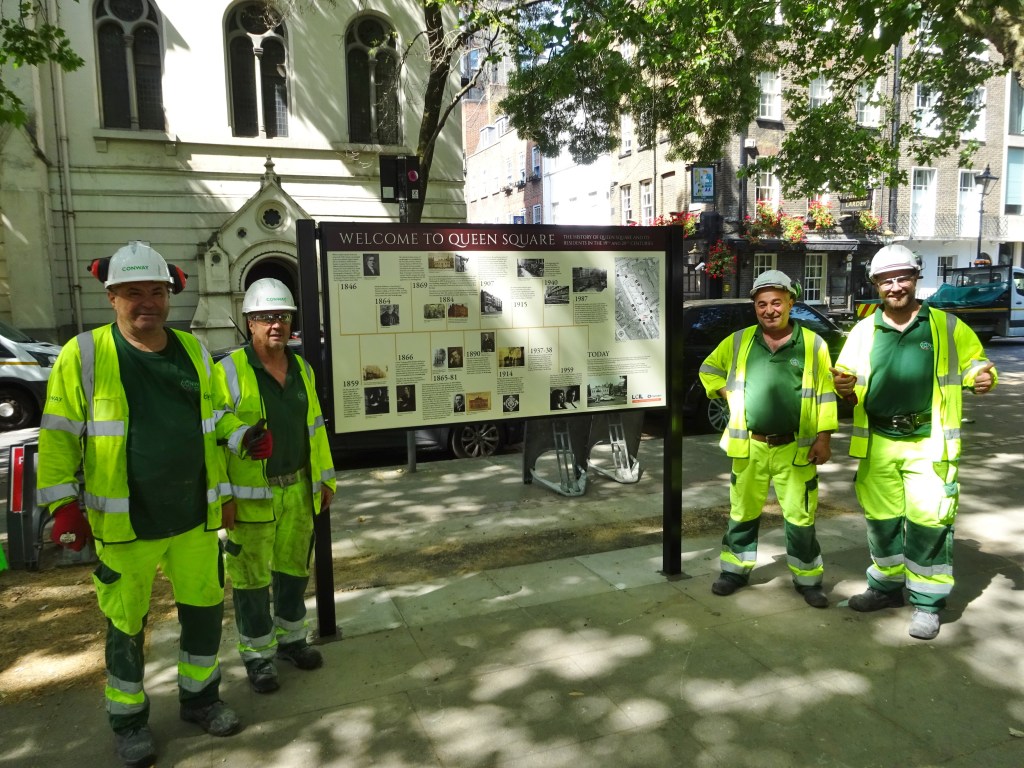
A two-sided interpretation board has recently appeared in Queen Square, at the instigation of local residents, which tells the long and interesting history of these gardens. It was kindly erected free of charge by the contractors, Conway. The prominent incidents and personalities of the square’s many centuries are attractively illustrated.
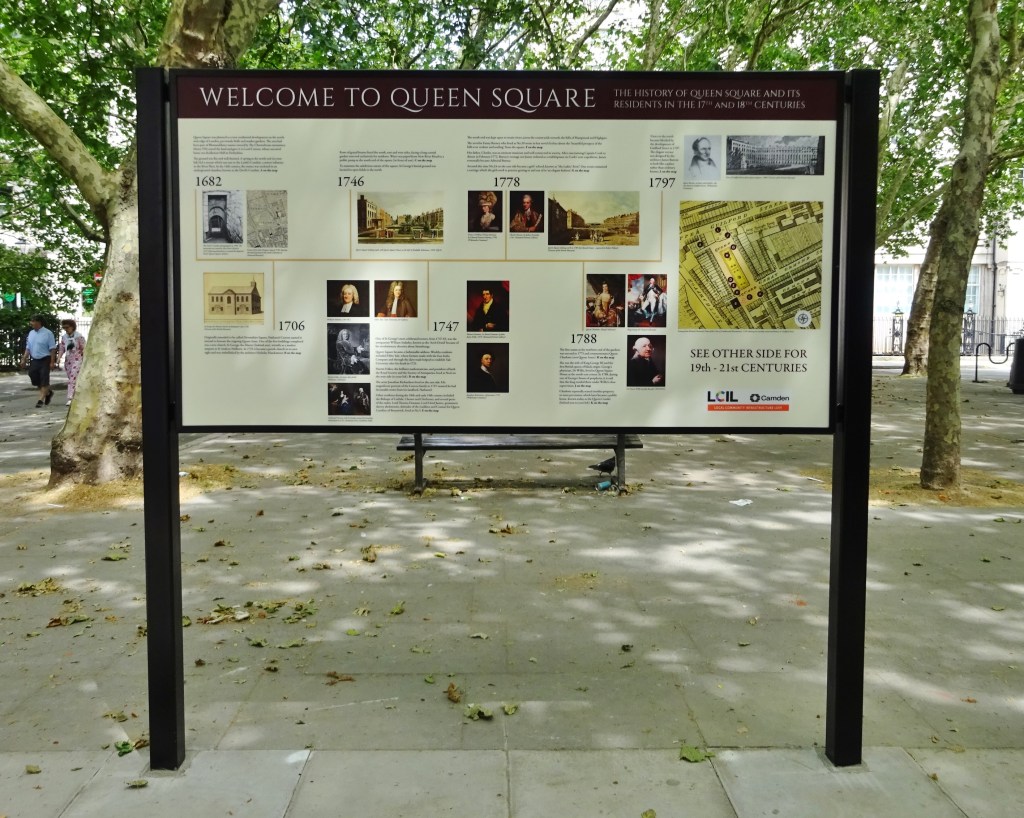
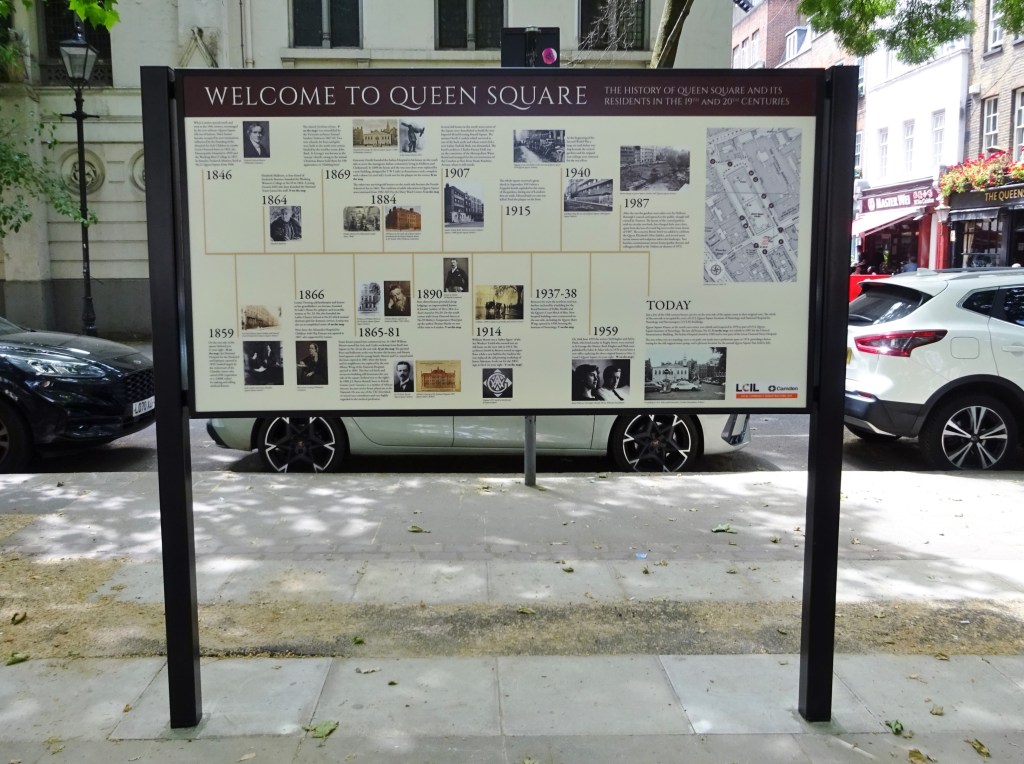
Queen Square was formerly known as Queen Anne’s Square, after the monarch of the time. It started life as the garden of Sir Nathaniel Curzon’s private house, but was laid out as a square in the decade up to 1725, after the church of St George the Martyr, now St. George’s Holborn, had been built by public subscription in 1706. ‘Square’ is something of a misnomer, as it was originally only built on three sides, with the north left open to the countryside then still around it, with views out to the Hampstead and Highgate hills. Later in the Georgian period, the view was closed off by a ‘palace-fronted’ terrace of houses in what is now Guilford St; even later a hotel and private blocks of flats were built into the north end of the square masking these buildings.
Queen Charlotte would visit the square to tend to her sick husband George III, who was being treated there for his illness. The pub on the corner near the church, called the Queen’s Larder, is reputed to be where she stored food for the patient and the statue in the gardens is thought to be of Queen Charlotte. The health theme continued into the Victorian period with several hospitals being established, and the gardens are heavily used by hospital visitors and patients to this day.
Check out both sides of the board for lots more information.

